
There is a wave of student protests currently echoing across India. As an observer, I have taken the role of eagerly listening and consuming varying opinions, ideologies, and perspectives—even those I may not entirely agree with.
If you immediately oppose differing viewpoints, you miss out on a broader worldview and risk staying constricted in your own bubble.
Rather than picking sides and retreating into an echo chamber, there is profound value in viewing these events from a distance to critically analyze what went well, what failed, and how future movements can learn from it.
The recent youth-led agitation, spearheaded by the Cockroach Janta Party (CJP), stands as a prime example of a modern, successful protest. In just over a month, this movement achieved what many could not: forcing the resignation of Union Education Minister Dharmendra Pradhan in July 2026 over alleged irregularities in competitive examinations (NEET).
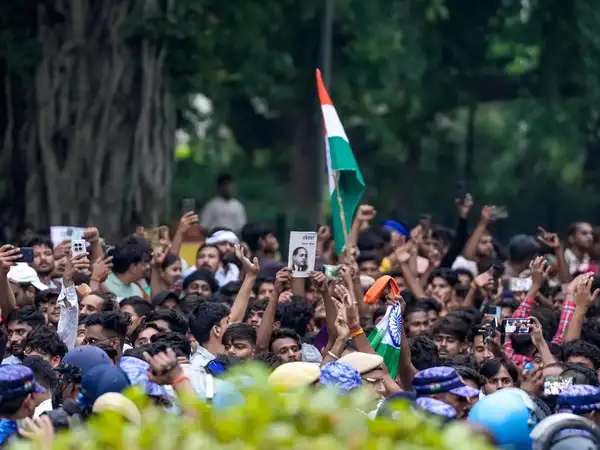
To put this into perspective:
- 🚜 The 2020–2021 Indian farmers’ protest took well over a year of grueling demonstrations.
- 🪧 The 2019-2020 CAA-NRC protests stretched on for months before being derailed by communal violence and the pandemic.
- 🤼 The 2023 Indian wrestlers’ protests also spanned almost a year with mixed outcomes.
In contrast, the CJP movement’s rapid impact offers a masterclass in organizing a successful protest against a powerful, populist government.
Here is a breakdown of why this movement succeeded and how it serves as a blueprint for democratic dissent.
🛑 1. A Masterclass in De-escalation
I would call this protest a strategic masterpiece. The organizers seemed to predict every criticism and preemptively neutralized threats that usually derail such movements.
Their messaging consistently emphasized peace and the immediate de-escalation of any conflicts with anti-social elements. Protesters were provided with clear handbooks and guidelines:
💧 “Bring water, wear comfortable shoes, and strictly disengage from any disruptive individuals.”
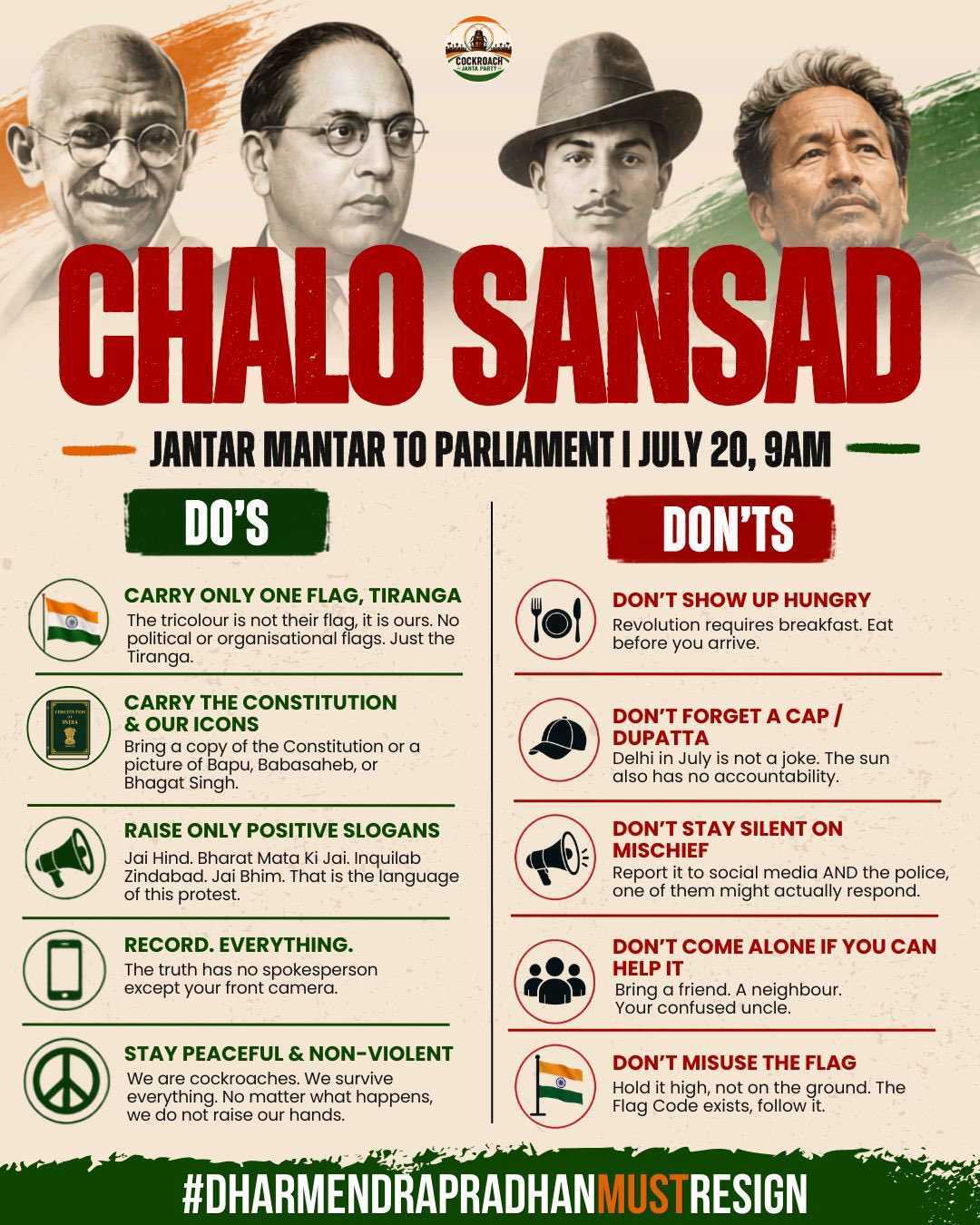
By calling out repression tactics early—such as exposing attempts to plant miscreants or stage violence (like bringing in trucks of stones to frame the protesters)—they ensured the narrative remained focused on their democratic rights.
🗣️ 2. A Defined Leadership Structure
When contesting a populist regime, having a clear face and a structured leading body is crucial. The CJP movement understood the importance of personality and credibility.
The roles were clearly defined:
- The Founder: Abhijeet Dipke, a political communications strategist, served as the central organizer and the face for crucial announcements.
- The Veteran Credibility: Renowned climate activist Sonam Wangchuk joined the movement, bringing immense national credibility. His grueling 26-day hunger strike at Jantar Mantar added severe moral weight to the cause.
- The Articulate Spokespersons: A core team of spokespersons, including Saurav Das, Vijeta Dahiya, and Ashutosh Ranka, carefully coordinated media interactions.
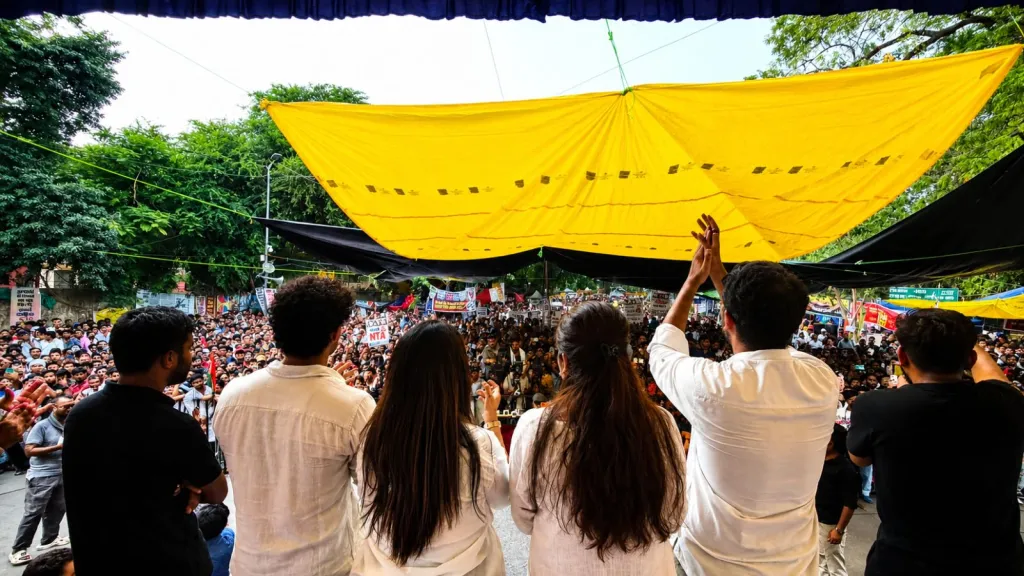
This tight-knit “5-body” style leadership team effectively guided the masses, maintaining discipline and applying targeted pressure on the government.
🎯 3. Clear, Countable, and Simple Demands
A common pitfall of mass protests is diluting the message with vague demands for “systemic reform” or “accountability.” The CJP was highly strategic. While they had a broader manifesto tackling electoral integrity and media reform, their immediate demands regarding the education crisis were laser-focused:
- Resignation: The immediate resignation of the Union Education Minister.
- Compensation: ₹1 crore in compensation for the families of students who tragically lost their lives to suicide during the NEET controversy.
- Accountability: Strict action against police personnel who used excessive and disproportionate force against peaceful protesters.
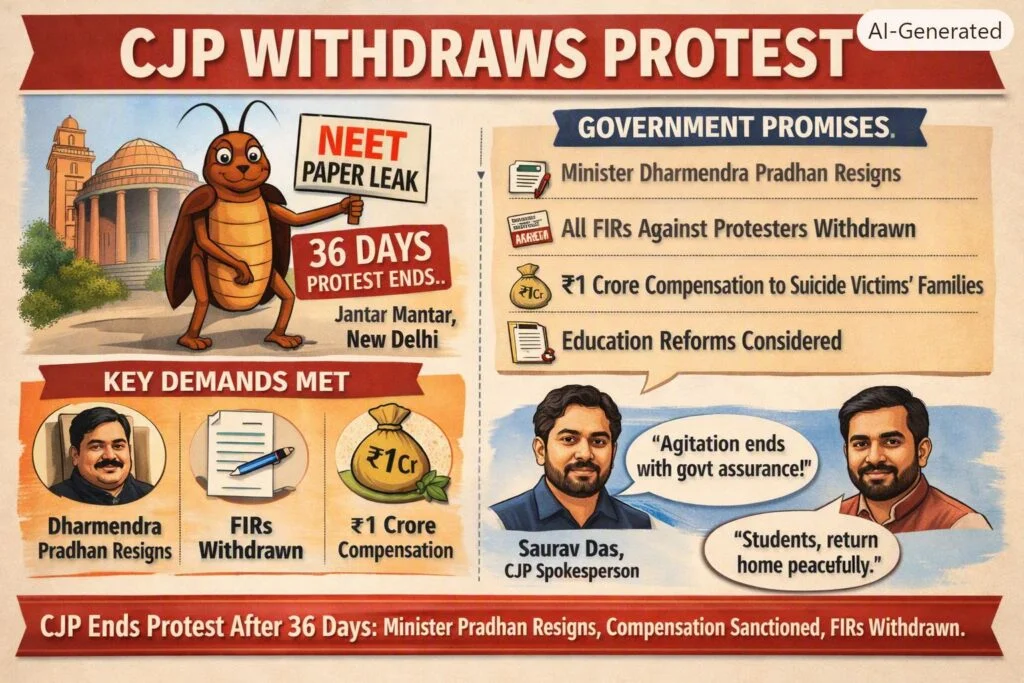
These demands were quantifiable. When the Education Minister finally resigned, it provided a clear, undeniable victory—or as Dipke called it, the “first wicket”—boosting morale for the continued fight.
📍 4. Strategic Geography
Rather than calling for a nationwide shutdown (a Bharat Bandh), which often becomes unmanageable and prone to violence, the CJP centered their physical agitation at Jantar Mantar in New Delhi.
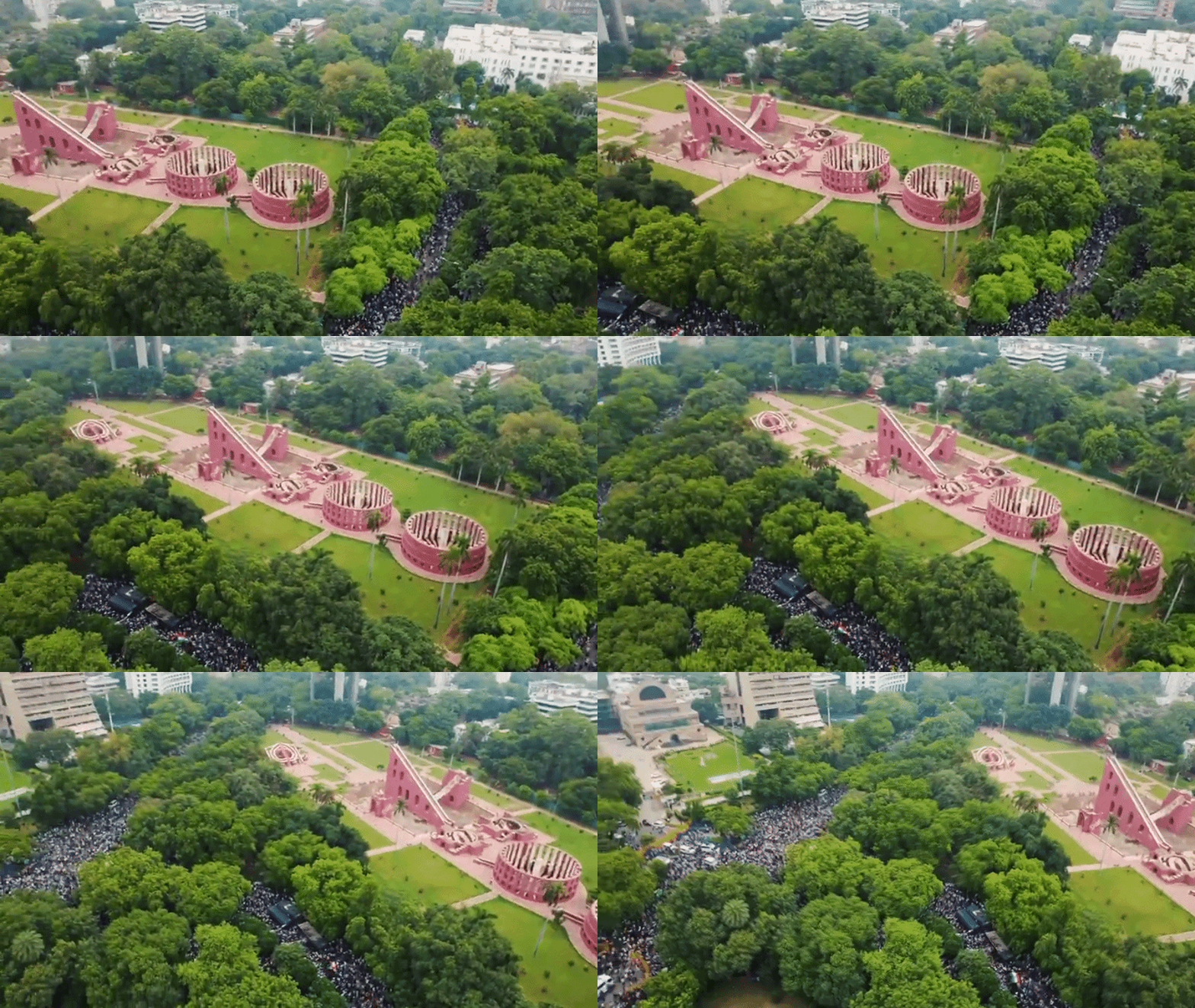 Jantar Mantar, New Delhi – The epicenter of democratic dissent.
This centralized approach made the protest site a national symbol. It allowed authorities and organizers to manage the crowds effectively. Supporters across the country who couldn’t attend in person were given clear avenues to help via NGOs and donations, while the constant threat of taking the protest “nationwide” kept the government under pressure.
📱 5. Gen-Z Demography and Breaking Echo Chambers
The protest had a clearly defined demographic: Gen-Z. This demographic swarmed the protest sites, driven by a need to prove their worth and secure their futures.
They utilized social media brilliantly, mixing humor, satire, and creativity without losing the seriousness of their demands. In fact, the very name of the party—Cockroach Janta Party—was a satirical reclamation of a derogatory remark made against unemployed youth.
While mainstream news media attempted to discredit the protest (alleging foreign funding or framing it as a national threat), Gen-Z protesters shattered these echo chambers. Through viral memes across platforms like Instagram (@cockroachjantaparty) and X (#MainBhiCockroach), witty posters, and raw, unfiltered videos of the reality on the ground, the core message of the protest penetrated even the most insulated digital bubbles.
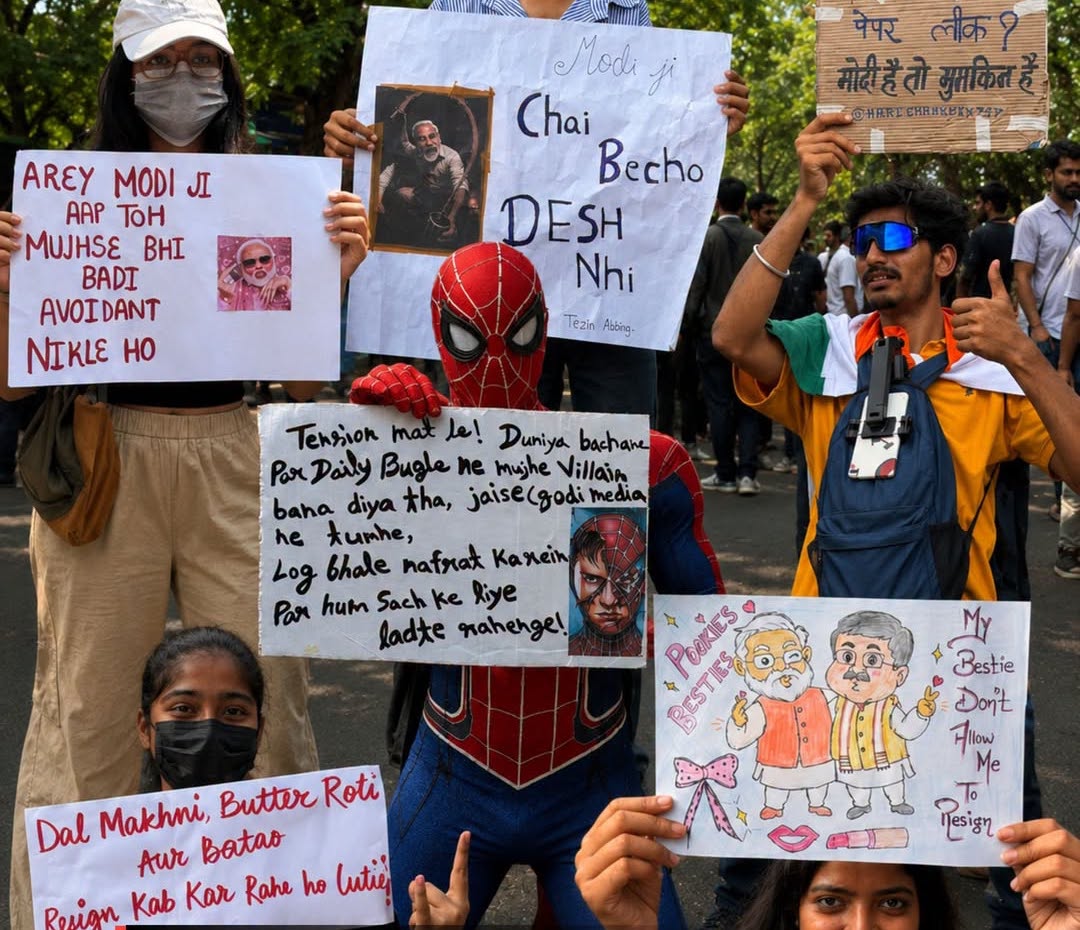 Viral witty posters played a huge role in breaking through traditional media narratives.
🌪️ 6. Capitalizing on “Free Factors”
Beyond their controlled strategies, the movement capitalized on external environment factors:
- Pent-up Anger: Frustrations over issues like the Electoral Bonds scheme (chanda chori), unemployment, and mismanagement provided a fertile ground for mobilization.
- An Institutional Vacuum: The public’s loss of faith in the traditional political opposition, mainstream media, and even the courts created a sense of extreme personal responsibility. The youth realized that if they didn’t step in, no one else would.
- Government Mismanagement: The government’s heavy-handed response backfired spectacularly. The forcible removal and “illegal detention” of Sonam Wangchuk by Delhi Police in July, alongside disproportionate police force against students, only fueled the public’s outrage.
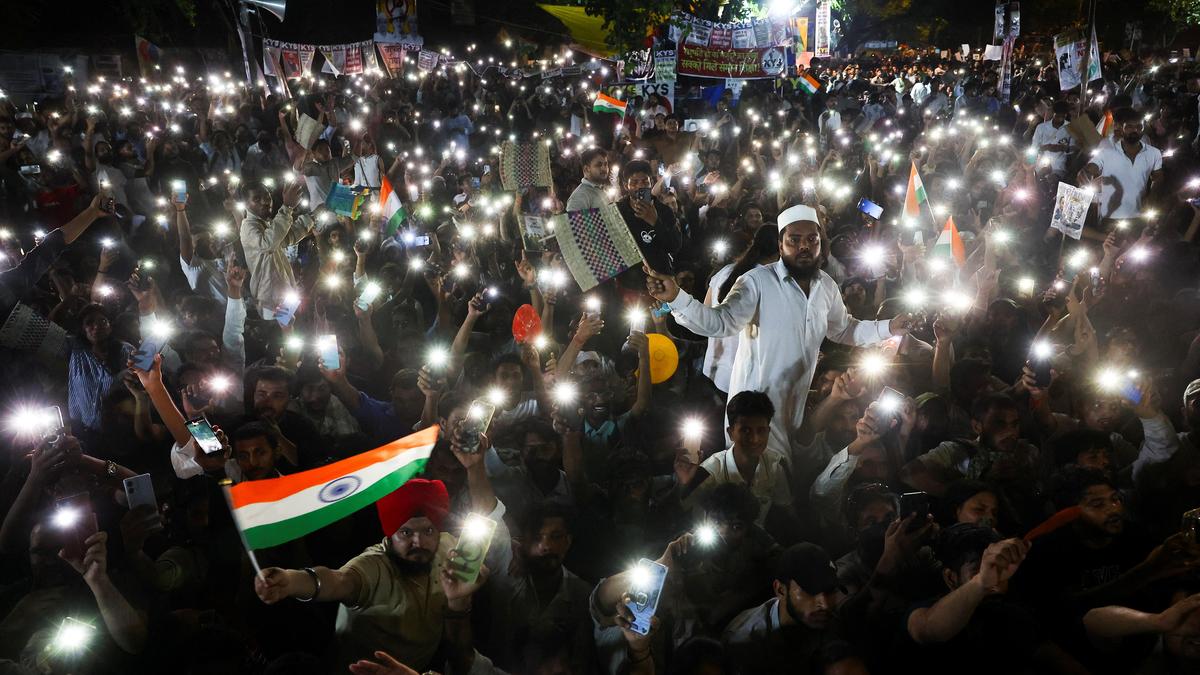
- Real-time Fact-checking: The sheer volume of smartphone cameras at the protest site meant any misinformation or planted miscreants were identified and exposed immediately.
⚠️ Vulnerabilities and Derailing Chances
However, the movement was not without its flaws, providing crucial lessons for the future:
- Communication Blackouts: Internet shutdowns remain a potent weapon against protests. Movements must establish robust offline coordination networks, utilizing physical hoards and localized volunteer chains.
- Leadership Detention: During instances when core leaders were detained or indisposed, the movement occasionally stalled. There is a critical need for fallback protocols and secondary leadership tiers to take over seamlessly.
- Asymmetrical Sacrifices: Relying heavily on extreme measures like a 26-day hunger strike by a single major player (Wangchuk) creates a single point of failure and puts immense physical risk on individuals, which can derail the collective momentum if they are hospitalized.
📌 Conclusion: Guidelines for a Successful Protest
The CJP protests of 2026 have redefined how democratic dissent can be organized in India. For any future movement looking to make a tangible difference, the blueprint is clear:
- ✅ Define specific, achievable demands.
- ✅ Establish a clear, credible, and multi-tiered leadership structure.
- ✅ Preemptively plan for de-escalation and disengage from violence immediately.
- ✅ Centralize the physical protest while decentralizing digital support.
- ✅ Use creative, satirical communication to bypass biased mainstream media.
- ✅ Always have offline contingency plans for communication and leadership.
Protesting in the largest democracy is not just about showing anger; it is about strategic, disciplined, and relentless endurance.
Loading comments...